
Getting There & Around
Overview
The essential travel tips for Møn at a glance: twelve top sights from the chalk cliffs to the Dark Sky Park, what's free, what costs money, and how to combine it all cleverly.

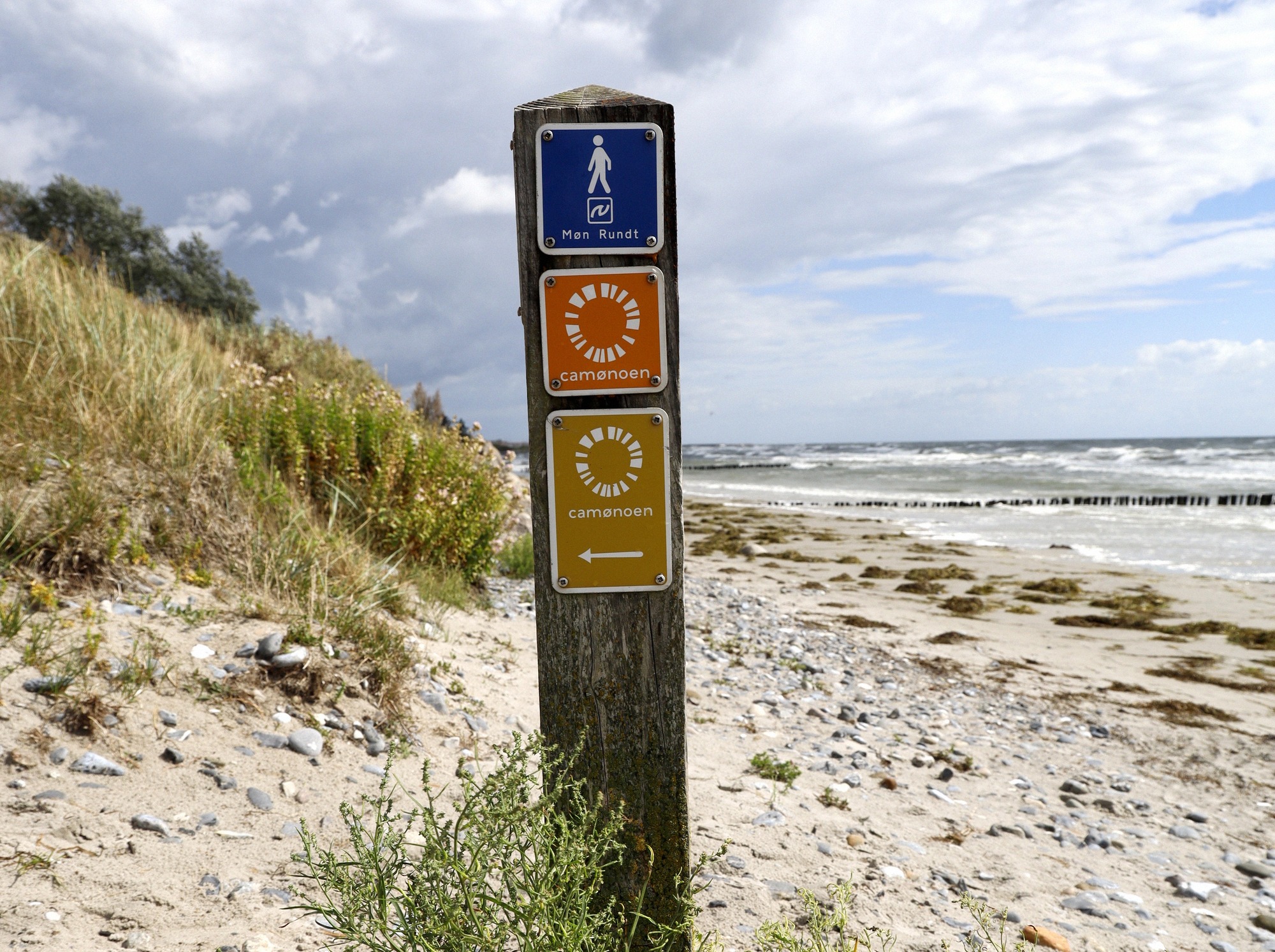
Møn is small but packed: chalk cliffs, medieval fresco churches, a Stone Age passage grave and one of Scandinavia's darkest night skies all sit within a few kilometres of each other. These travel tips bring together the island's twelve essential sights and tell you honestly what's free, what costs money, and how to combine the highlights sensibly over one or two days.
The unmissable highlight is Møns Klint, the white chalk cliffs with their beach, viewpoints and long wooden staircases, open free of charge around the clock, all year round. Right above it sits the GeoCenter Møns Klint, which brings the story of how the cliffs formed to life and is especially worthwhile in the rain or with children. Crowning the slope is the beech forest of Høje Møn, with its network of walking trails.
To the north lies Ulvshale, with forest, beach and wild horses, completely free and open all year. On the cultural side, Denmark's largest passage grave, Kong Asgers Høj, the romantic Liselund Castle with its landscape park (free to enter all year), and the Møn Fyr lighthouse at the southeastern tip round things out. In Stege, Mølleporten is Denmark's only surviving medieval town gate.
In a class of their own are the three fresco churches: Elmelunde, the oldest and the one that gave the frescoes their name; Keldby, with the most extensive cycle of paintings; and Fanefjord, widely regarded as the artistic masterpiece and sitting right beside the Grønsalen megalithic tomb. All three are free to enter.
The great thing about Møn is that almost everything worth seeing is free at its core. Completely free, no entry fee, no parking charge, are Kong Asgers Høj and Ulvshale. The three churches charge no admission; a small donation in DKK is customary but voluntary. Møns Klint, Liselund park, the Høje Møn forest and the grounds around the lighthouse are also free, the only thing you pay for is parking.
The most important practical tip concerns exactly that parking fee: Møns Klint and the GeoCenter share the same car park. The 45 DKK charge applies per entry, recorded by number-plate scan, whether you only walk to the staircase or also visit the museum, one parking fee, two possible ways to spend your time. GeoCenter admission (adults 155 DKK, children aged 3-11 100 DKK, DKK 10 cheaper per ticket when booked online; open Easter to the end of October) is separate from this. In winter you can avoid the fee by parking at Liselund or Camping Møns Klint instead.
You can only see the inside of Mølleporten with a Møn Museum ticket (adults 65 DKK, free under 18). Castle tours at Liselund (normally 60 DKK, free for children, around 45 minutes) are currently paused, with no confirmed dates for 2026, but the park itself remains free to visit all year.
The Møn & Nyord Dark Sky Park is open landscape with no gate or ticket booth, and is accessible free of charge around the clock; only guided stargazing tours cost money. Plan for a clear, moonless night, bring a red-light torch, and head for one of the open viewing spots such as Aborrebjerget, Kongsbjerg, Jydelejet, or the bird tower on Nyord. One thing to note: under Danish nature access law, the private forested section of Klinteskoven at Høje Møn is only open from 06:00 to sunset and only on marked paths, for night-time stargazing, choose the open areas outside the forest instead.
Stege makes a good base, with a short walk to Mølleporten and the churches; for a Dark Sky night, Hyldevang near Ulvshale offers free camping under the open sky. For more on getting to the island, the best time to visit, and multi-day itineraries, see the rest of our trip-planning guides.