
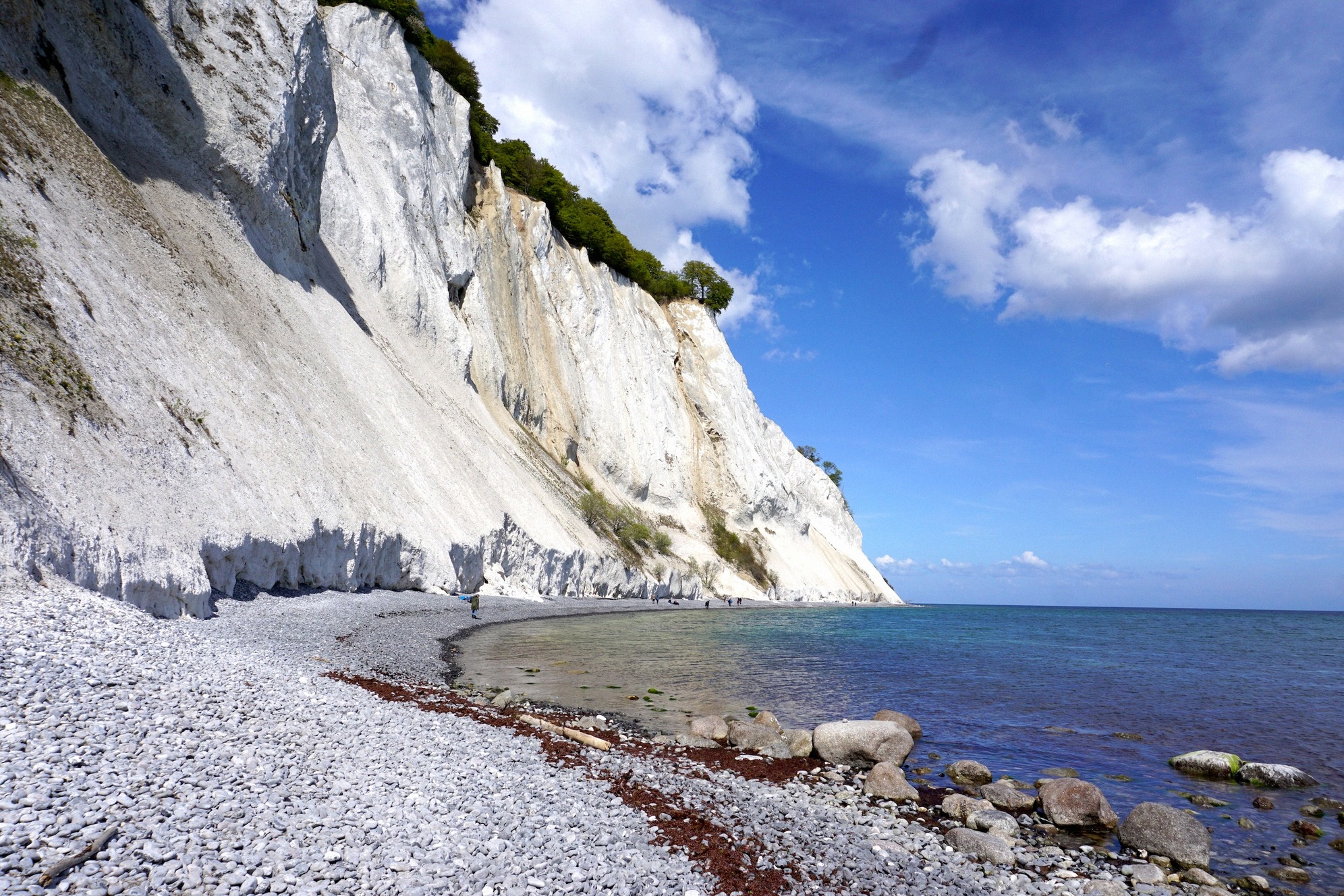
Møns Klint
White chalk cliffs with a fossil beach
Overview
Chalk cliffs, ancient beech forest, salt meadows full of birds and Scandinavia's first Dark Sky Park, an overview of Møn's nature highlights, with trails, prices and planning tips.
White chalk cliffs with a fossil beach
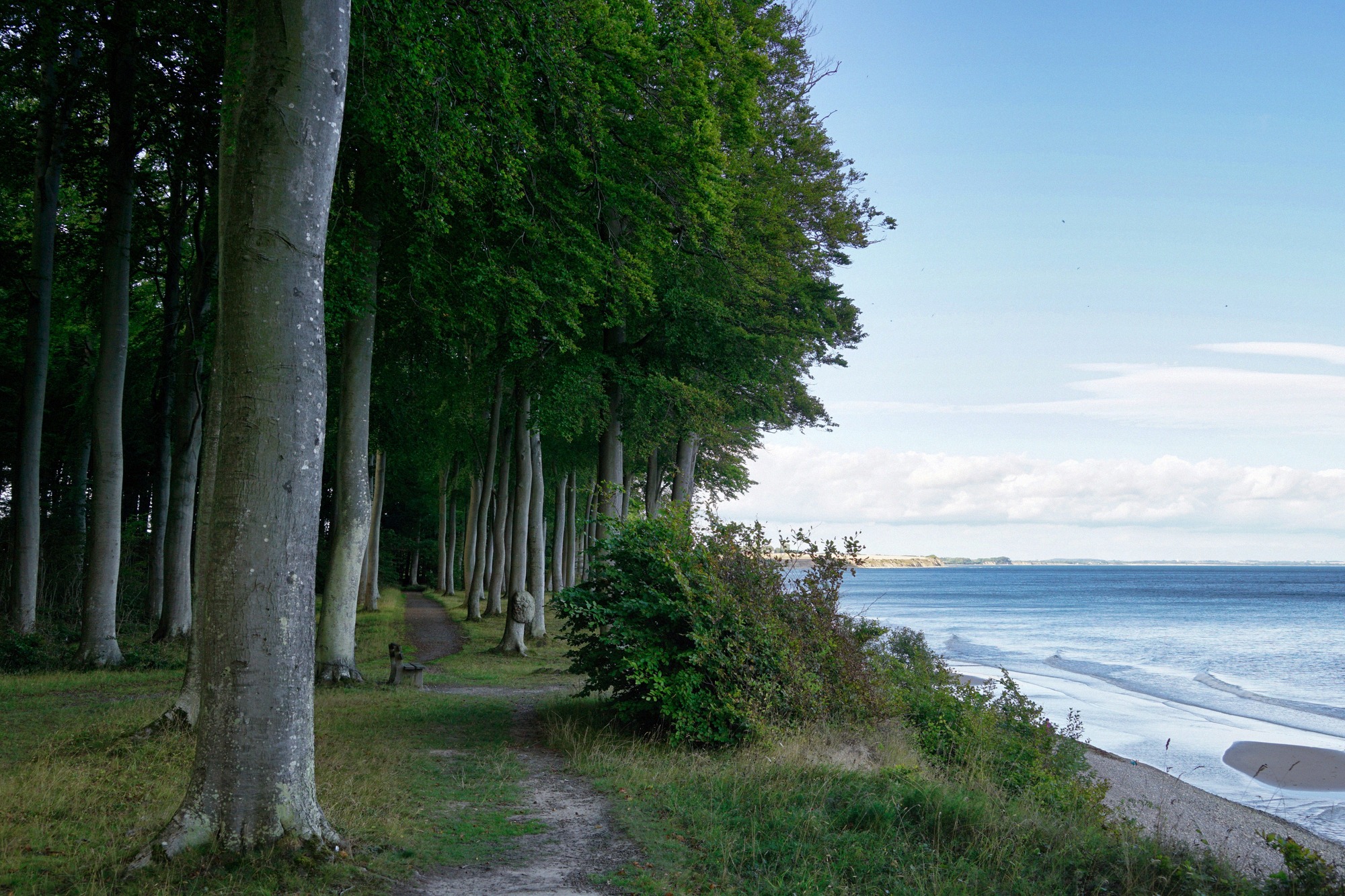
Beech forest and hiking trails above the chalk cliffs
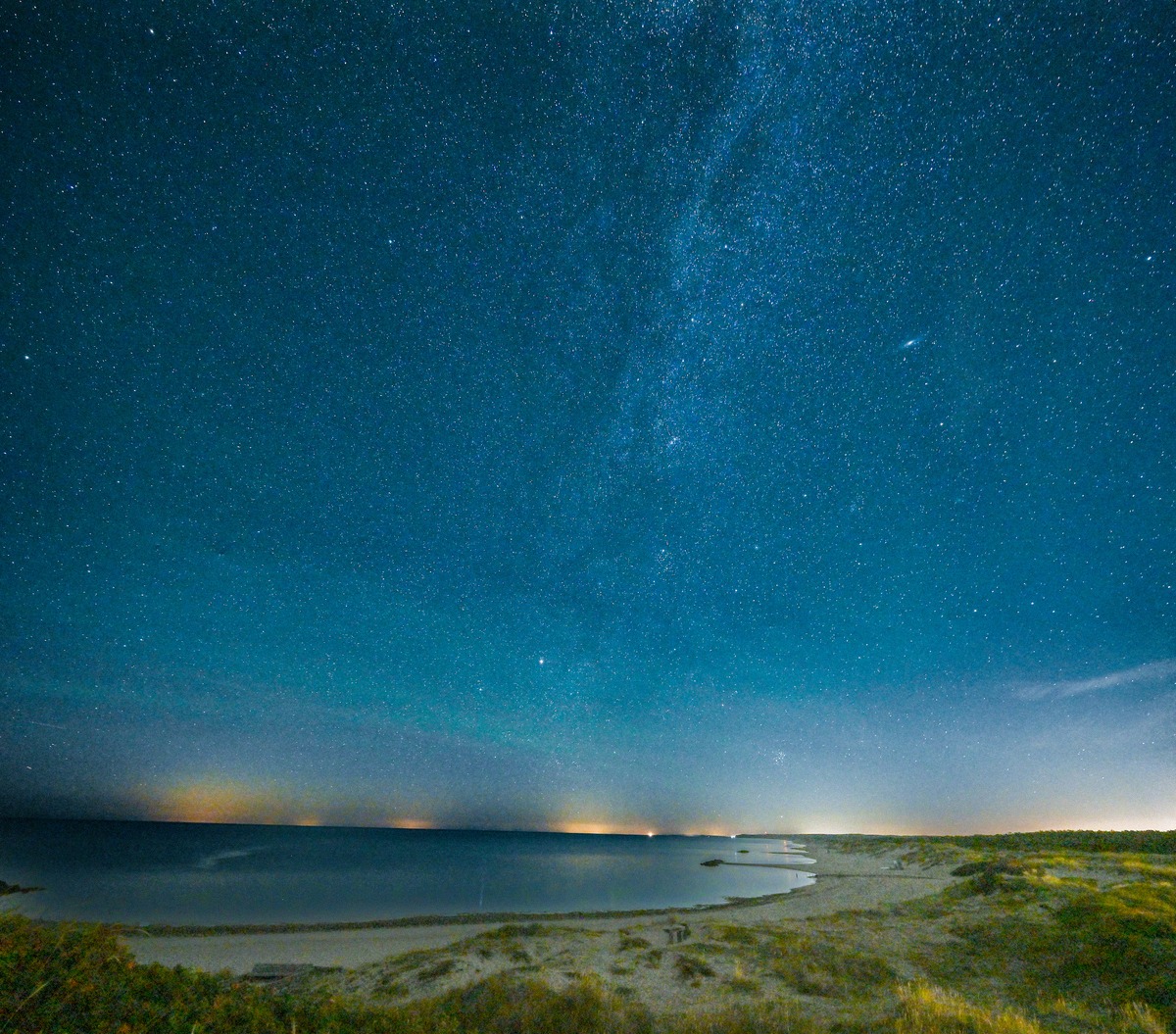
Scandinavia's darkest night sky over Møn & Nyord
Nature reserve with wild horses in northern Møn
No results found.
Møn is above all a nature destination. In the east, the famous chalk cliffs of Møns Klint drop steeply into the Baltic Sea; behind them, some of Denmark's oldest beech trees grow among rare orchids in Høje Møn. To the north, Ulvshale combines ancient woodland with a flat sandy beach and leads on to the bird island of Nyord and its wide salt meadows. And at night, the sky itself becomes the attraction - Møn and Nyord together form Scandinavia's first Dark Sky Park.
This overview takes you through the island's main nature areas, with specific trails, seasons, prices and practical planning notes.
The island's landmark is a roughly six-kilometre stretch of chalk cliffs on the east coast. The highest point, Dronningestolen (the Queen's Chair), rises 128 metres above the Baltic. From the plateau, the Maglevandstrappen staircase with 497 steps leads down to the fossil beach, according to the GeoCenter and the Danish Nature Agency, the longest staircase in Denmark. In the forest behind the cliffs, seven marked routes are signposted, ranging from 2.2 to around 14 kilometres, from a short stroll to a full day out. The white cliff face is actively eroding, so the golden rule at the edge applies, keep your distance, stay on the marked paths and take barriers seriously.
In July 2025, Møns Klint was named a UNESCO World Heritage Site, and with around 250,000 visitors a year it's the obvious starting point for exploring Møn's nature. The cliffs, beach and stairs are open year-round, around the clock, free of charge; you only pay for the optional GeoCenter Møns Klint. An alternative, flatter beach access point is about three kilometres away at the Møn Fyr lighthouse. For more on the forest and trails, see Høje Møn.
The north of Møn has a very different character from the cliffs. Near Stege, Ulvshale begins, a freely accessible nature reserve with ancient mixed forest, a flat sandy beach and free-roaming Exmoor ponies; marked trails cross forest, dunes and meadows, with one route suitable for wheelchairs. Access is free year-round (0 DKK).
A causeway and a single-lane, traffic-light-controlled bridge lead on to the small island of Nyord. The island has been reachable by car since 1968; however, the historic village centre is car-free
In 2017, Møn and Nyord became the first place in Scandinavia to be certified simultaneously as a Dark Sky Park and a Dark Sky Community, at the highest level (Gold Tier). Over 5,000 stars are visible to the naked eye, along with the Milky Way and, with patience, even the Andromeda Galaxy. The park is open landscape, free, with no ticket booth and no opening hours; only guided stargazing tours cost anything (for example with Naturguide Møn from 1,950 DKK per tour as a group rate).
Seven official viewing spots are designated: Aborrebjerget (the highest point, at 143 m), the bird tower on Nyord, Jydelejet, the park at Liselund Castle, Kongsbjerg, Lake Hunosøen and Hyldevang. Worth noting: Møns Klint itself is not one of them, and the part of Høje Møn forest bordering the private Klintholm estate is only accessible from 06:00 to sunset, for night-time visits, stick to the open spots outside that section. The darkest nights fall between September and March; full details are in the Dark Sky guide.
Nature itself costs almost nothing on Møn: Møns Klint with its beach and stairs, Ulvshale, the Nyord salt meadows, the Dark Sky Park and the landscape park at Liselund Castle are all freely accessible (0 DKK). What you mostly pay for is parking and optional museums. Parking at the GeoCenter Møns Klint costs 45 DKK, your number plate is registered automatically, payment is by QR code or at a machine, and the fee applies even if you're only heading down to the stairs. To save money, park for free at Camping Møns Klint or at Liselund Castle (free anyway over the winter half of the year) and walk from there.
The GeoCenter itself (exhibition, 3D cinema, café) is only open from Easter to the end of October; adults pay 155 DKK, children aged 3 to 11 pay 100 DKK, with a 10 DKK discount for booking online. In winter the museum is closed but the cliffs remain open; the toilets at the GeoCenter stay open year-round, daily from 06:00 to 22:00. For hiking, birdwatching and a Dark Sky evening, allow more than a single day, good bases are Stege and nearby Klintholm Havn. Sturdy footwear is a must at the cliffs and in the forests, and binoculars are worth bringing to the salt meadows. Routes around the island are covered in the getting there guide, seasonal advice in the best time to visit guide, and longer trails in the hiking guide.