
Kong Asgers Høj
Denmark's largest walk-in passage grave
Denmark's largest walk-in passage grave sits in western Møn, a 5,200-year-old Stone Age burial chamber you can crawl into, free of charge.
Contents
Denmark's largest passage grave
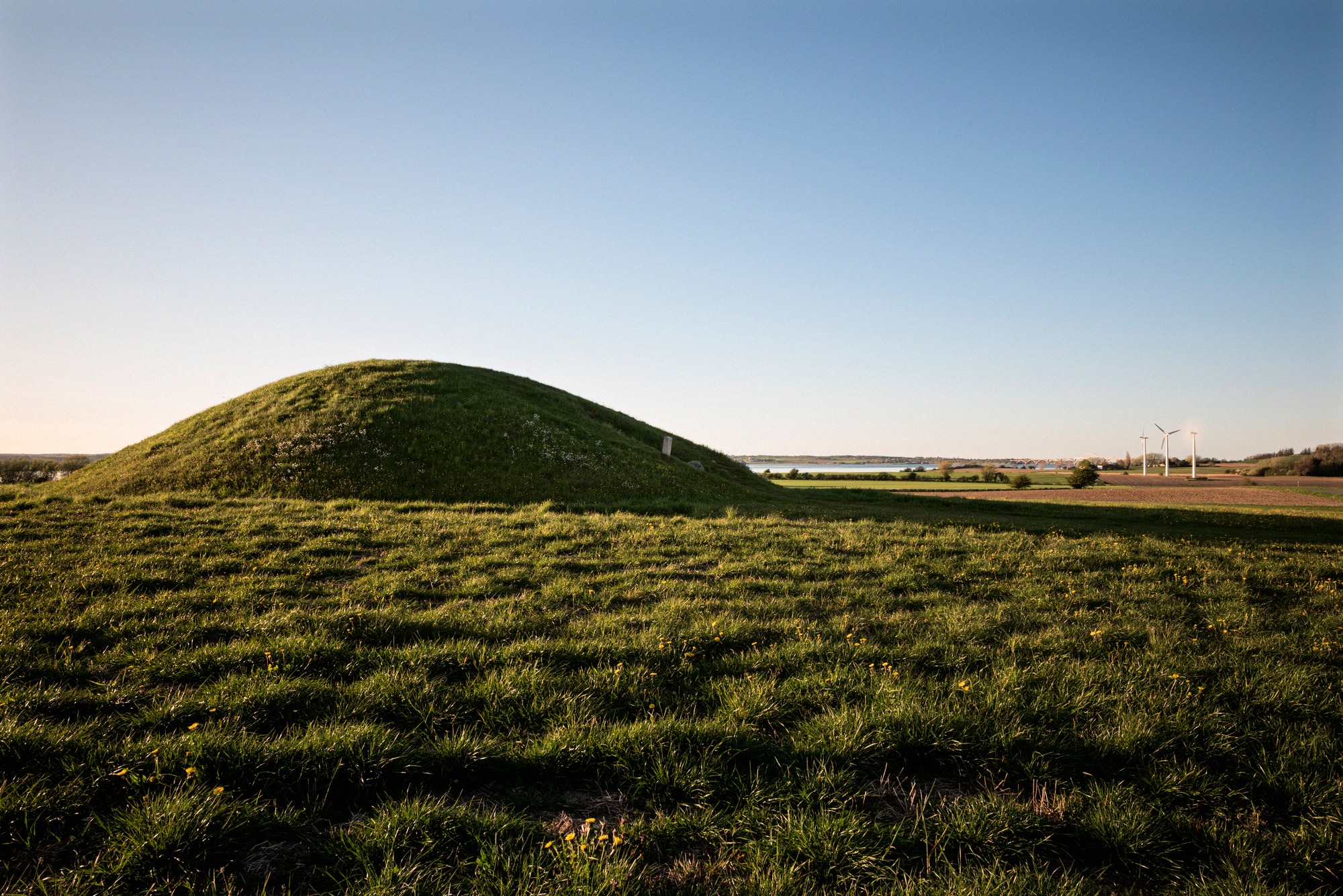
In the sparsely populated west of Møn lies Kong Asgers Høj, the country's largest walk-in passage grave (Danish jættestue). A burial chamber built from boulders weighing several tonnes, capped by massive roof stones, sits hidden beneath an earthen mound. A low passage leads from the outside into the chamber, and unlike many megalithic tombs, here you can actually crawl in and stand upright inside.
The name is more romantic than accurate, though. No King Asger has ever been documented; it's a piece of local folklore attached to the site, with no verified ruler and no surviving legend behind it. Despite the name, this has nothing to do with a literal royal tomb, the site predates every Danish royal dynasty by millennia.
History and dimensions
The passage grave was built around 3200 BC by the Funnel Beaker Culture, roughly 5,200 years ago in the Neolithic period. It's evidence of dense settlement on Møn long before the Viking Age. The construction itself is remarkable: the chamber measures about 10 metres long by just over 2 metres wide, and the passage runs around 7.5 metres, facing southeast. Builders used 19 supporting stones and 7 capstones.
The site was first excavated in 1839 by Gustav Hage, a merchant from Stege; the finds went to the National Museum in Copenhagen. No significant grave goods turned up, the tomb was likely reused repeatedly over the millennia and looted early on. It was voluntarily placed under protection as early as 1861. Today, Vordingborg Kommune maintains the site and its signage, while official oversight rests with the Danish Agency for Culture and Palaces (Slots- og Kulturstyrelsen).
What to expect
The tomb sits somewhat hidden at the edge of fields off Kong Asgers Vej; the final stretch is along an unpaved field track. Inside, it's narrow, low and pitch dark, without a torch you'll see nothing in the chamber. You crawl through the passage stooped over, then can stand upright once inside the chamber. Sturdy shoes and a torch are essential, and a bit of a sense of adventure helps too. The passage isn't suitable for anyone with claustrophobia or limited mobility, but the mound itself and its quiet rural setting are worth the trip even without the crawl.
There's no specific age recommendation, a steady hand for the torch and sturdy shoes are all you need. Allow 30 to 45 minutes for the stop.
A Stone Age circuit
Møn has an unusually high concentration of megalithic tombs, and several sites near Kong Asgers Høj combine into a short Stone Age circuit. Just 150 metres to the south is the round dolmen Sprove stordysse (around 3300 BC); about 3 kilometres southeast is Klekkendehøj, a rare double passage grave with two entrances, roughly the same age as Kong Asgers Høj. Both are also freely accessible. If you want to round it off, Fanefjord Kirke and its neighbouring megalithic tomb Grønsalen lie in the southwest of the island, a good half-day trip through Møn's prehistory.
Visiting and practical tips
The site sits on Kong Asgers Vej in 4780 Stege, freely accessible year-round with no fixed opening hours; admission, parking and the field track are all free of charge. The most pleasant time to visit is between May and September, when the field track is dry and there's enough daylight. Don't forget a torch, here it's not a nice-to-have but a requirement. For getting to this quiet corner of the island, see our getting-there guide; official information is available from Visit Møn.
Frequently Asked Questions
How much does it cost to visit Kong Asgers Høj? +
When is Kong Asgers Høj open? +
Can you actually go inside the grave? +
How old is Kong Asgers Høj? +
Was there really a King Asger? +
Nearby
Fanefjord Kirke
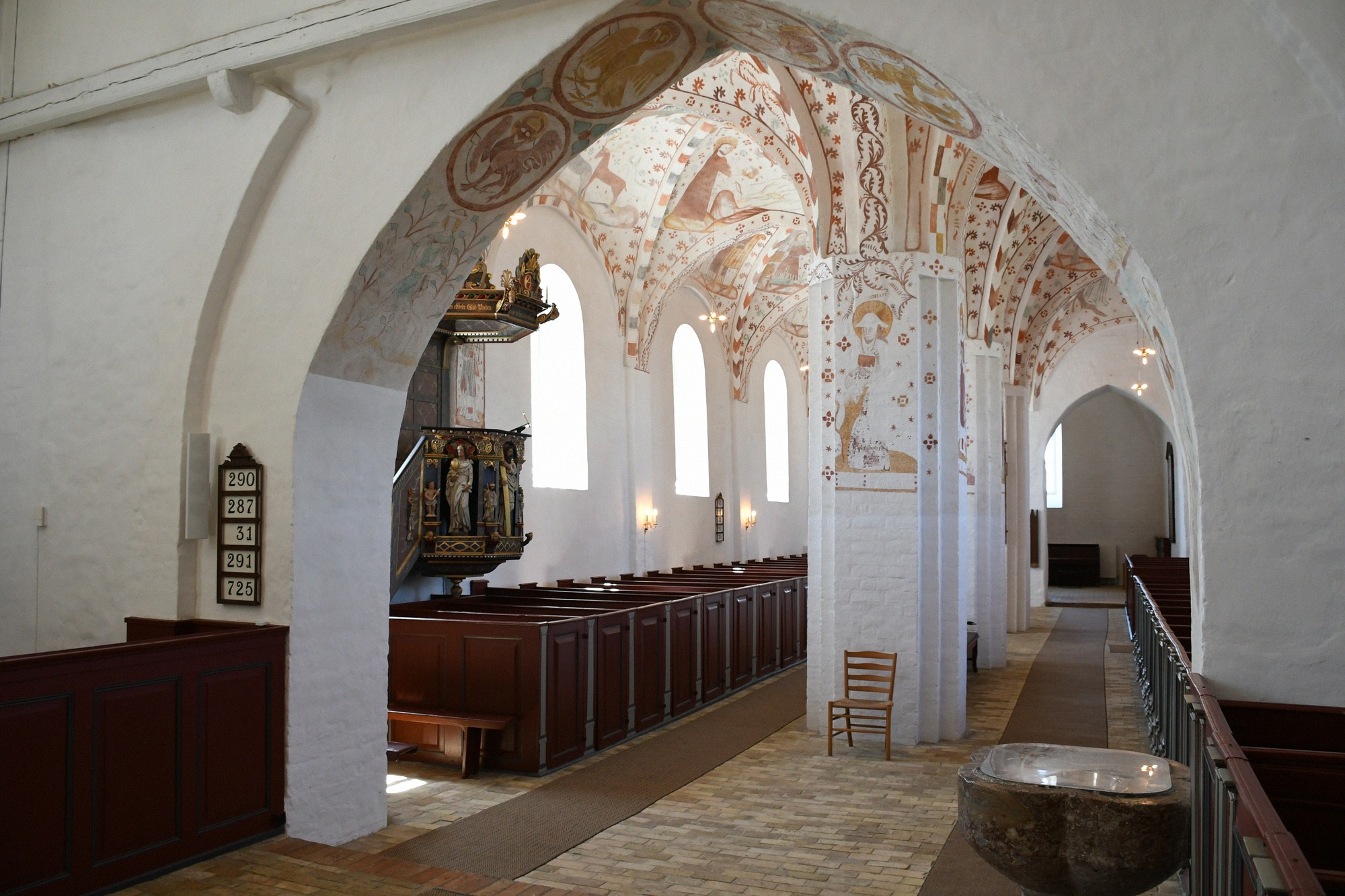
Standing alone above the Fanefjord, this church holds the finest vaulted frescoes by the Elmelunde Master, next door lies the 102-metre Grønsalen passage grave.
Mølleporten
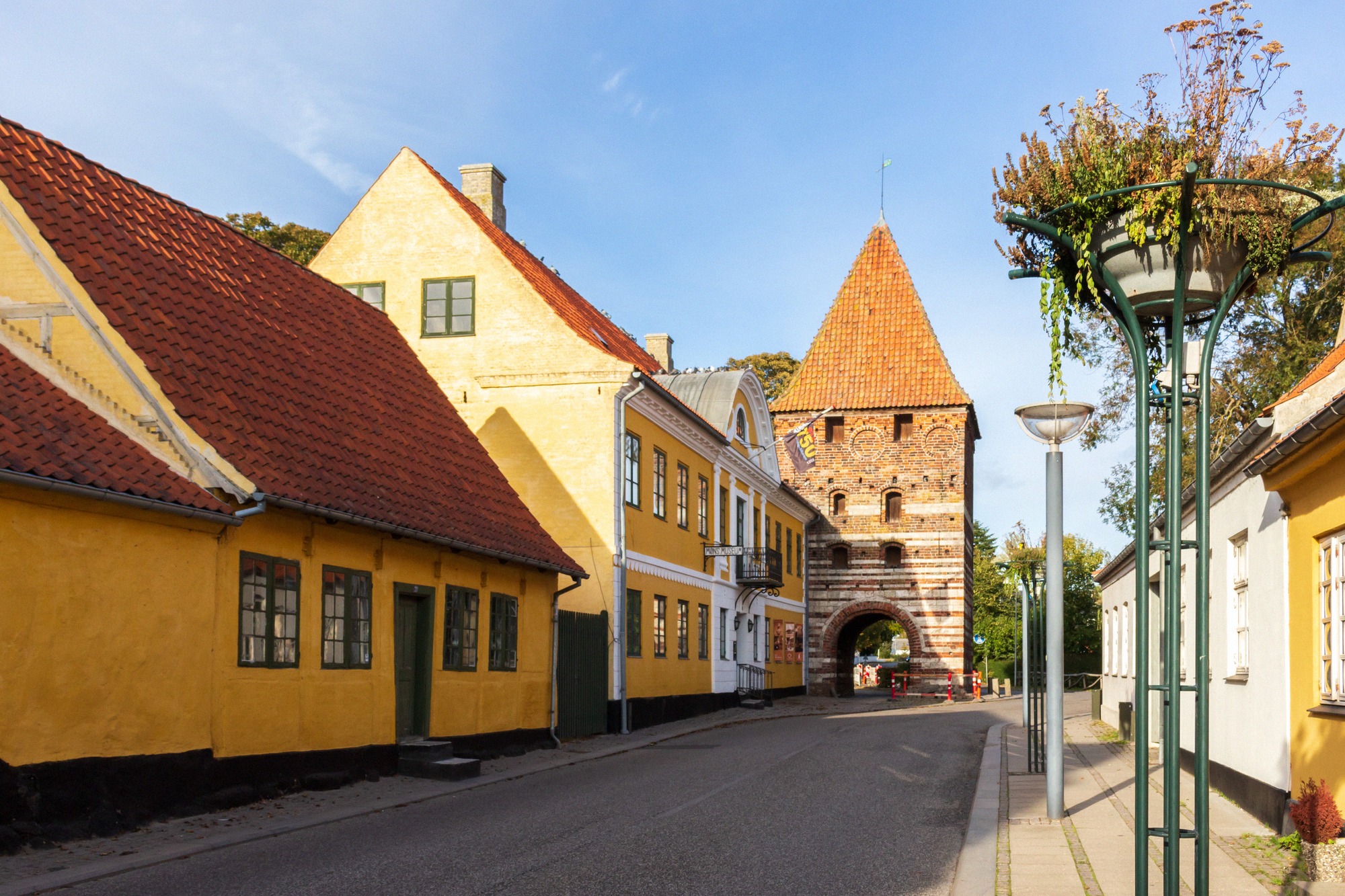
Mølleporten in Stege is one of only two surviving medieval town gates in Denmark, and since its restoration you can now go inside.
Ulvshale
Nature national park in northern Møn with ancient woodland, a flat sandy beach, salt marshes and free-roaming Exmoor ponies, the gateway to bird island Nyord.
Keldby Kirke
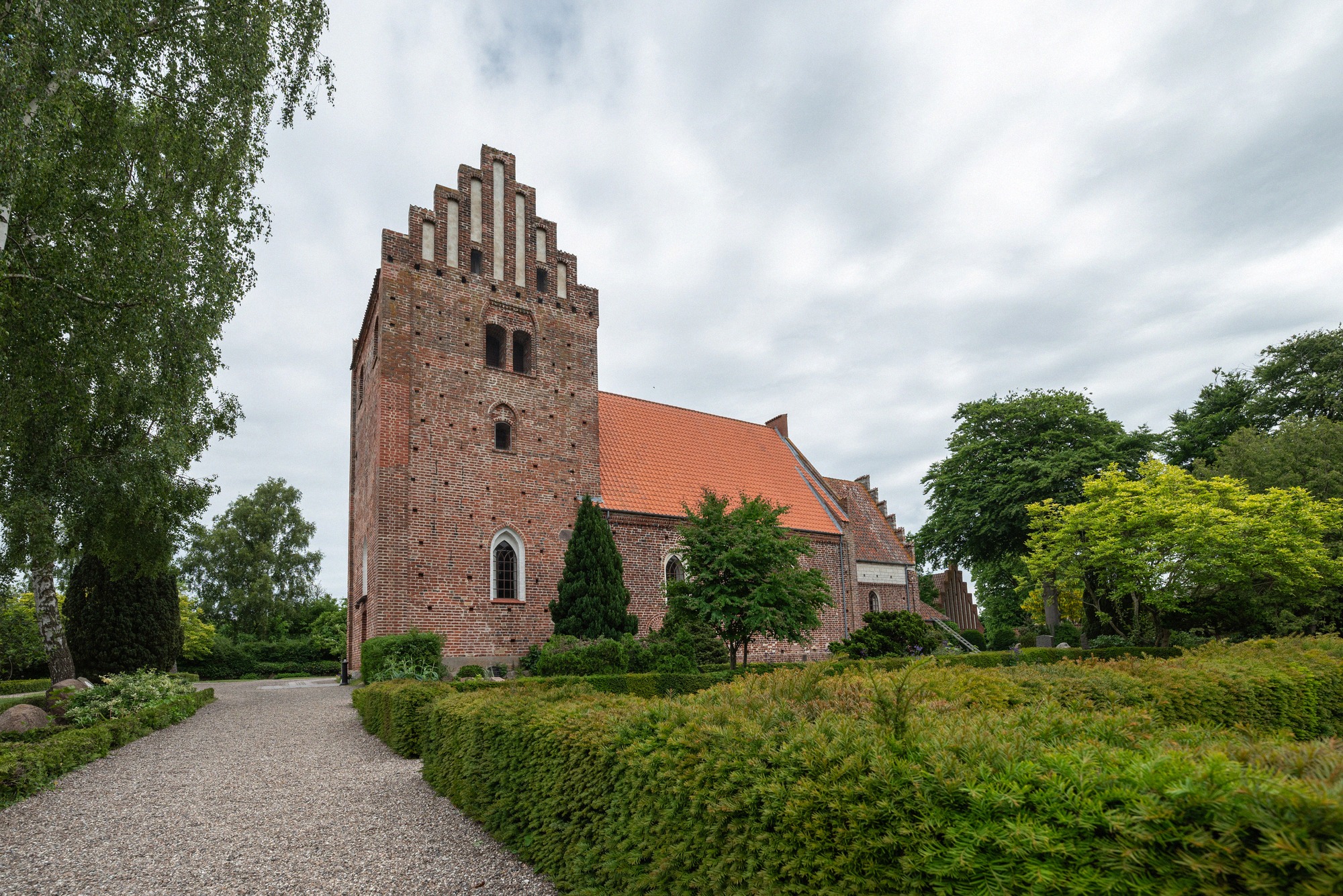
East of Stege, Keldby Kirke holds one of Møn's richest fresco programmes, wall paintings from the 13th to 16th century, including work by the Elmelunde Master.
Elmelunde Kirke
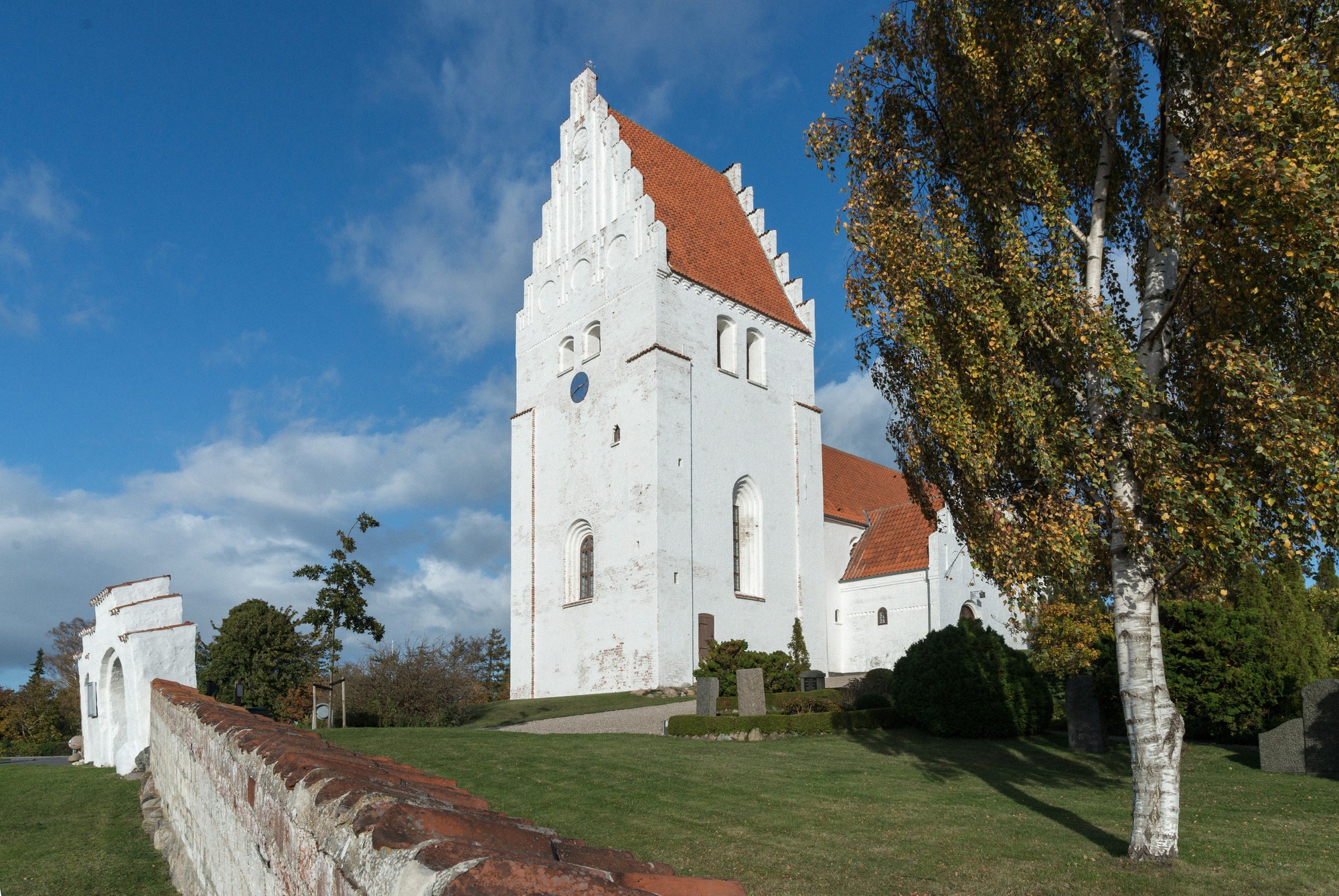
Elmelunde Kirke is the oldest church on Møn and gave the Elmelunde Master his name, its vaults are covered edge to edge with frescoes from around 1500.