
Møn in 3 Days
The route for first-timers
Overview
Plan Møn at your own pace, from the chalk cliffs to the fresco churches and Scandinavia's darkest night sky. Prices, the best time to visit and how to link the island together in two to three days.
The route for first-timers
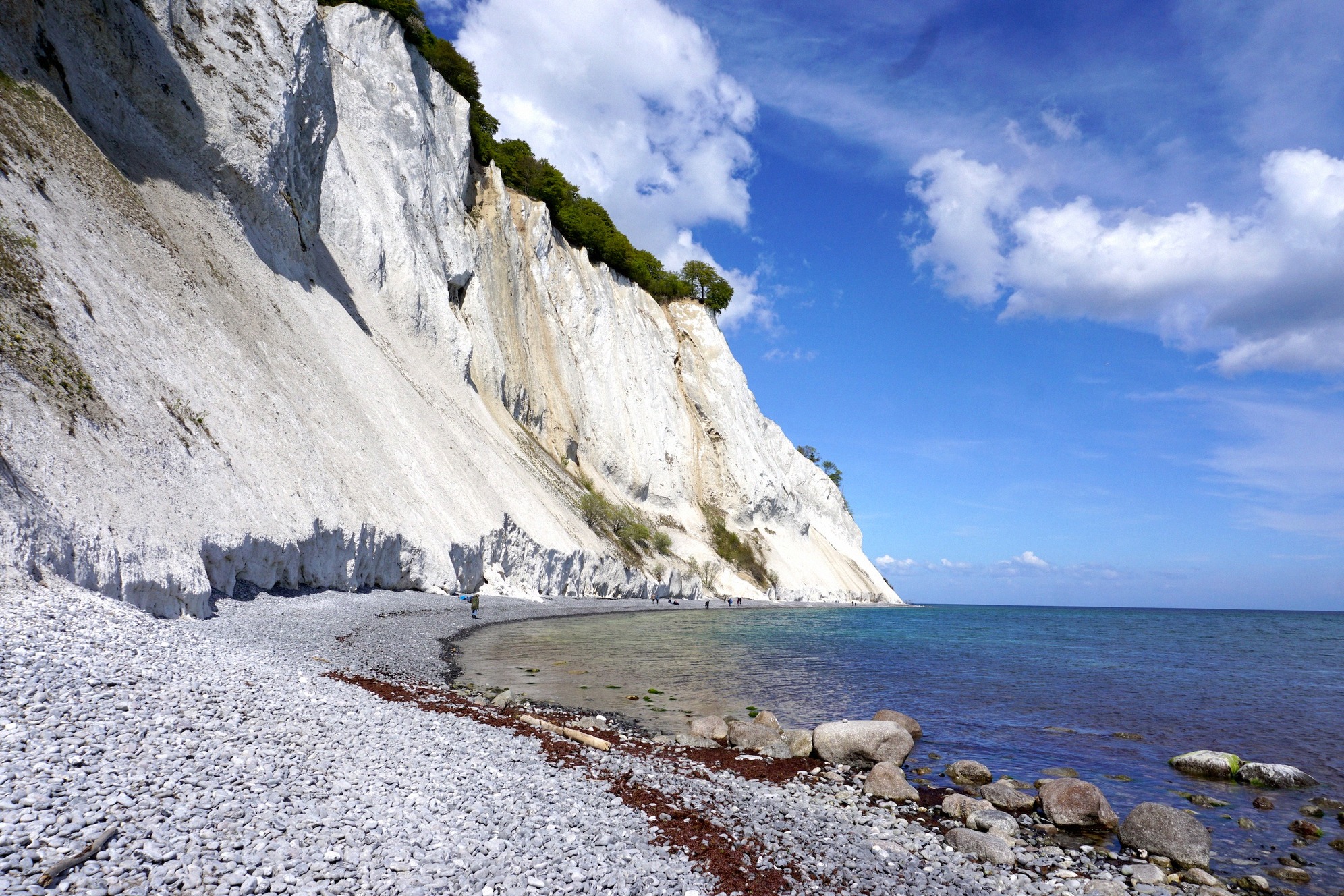
Møn is compact but varied, no single spot is more than about half an hour's drive from another. The obvious starting point is almost always Møns Klint: chalk cliffs up to 128 metres high, Denmark's longest staircase with 497 steps, and viewpoints that are freely accessible all year round. The neighbouring GeoCenter Møns Klint explains the geology and also serves as the main car park for the Klint and the Høje Møn beech forest.
The cultural counterpart is the island's three famous fresco churches: Elmelunde, Keldby and Fanefjord Kirke, with wall paintings by the Elmelunde Master from around 1500, all three free to enter. To the north, the Ulvshale nature area offers forest, beach and wild horses, alongside the Dark Sky Park Møn & Nyord, Scandinavia's first dark-sky park with seven freely accessible observation spots. With more time to spare, add the Liselund manor house, the Kong Asgers Høj passage grave, the Mølleporten town gate in Stege, and the Møn Fyr lighthouse.
Møn can be enjoyed surprisingly cheaply: eight of the twelve highlights cost nothing to see. Free of charge are the Klint, its beach and staircase, the Høje Møn forest, Ulvshale, all Dark Sky Park spots, Kong Asgers Høj, the grounds at Liselund, and the three churches (a voluntary donation is customary). The main costs are for indoor experiences: museum admission at GeoCenter (adults 155 DKK, children aged 3-11 100 DKK, 10 DKK cheaper each when booked online), the interior visit to Mølleporten via the Møns Museum ticket (adults 65 DKK, free under 18), and, when back on the programme, the Liselund manor tour (reference price 60 DKK, children free).
The most common hidden cost is parking: the GeoCenter car park costs 45 DKK per visit, whether or not you visit the museum and whether you're heading to the Klint or to Høje Møn. Parking at Møn Fyr is also chargeable, though the exact rate isn't officially published. If you'd rather not pay, free alternative car parks are available near Liselund and by the campsite.
A full day is enough for the highlights, but Møn rewards those who stay longer. Our 3-day itinerary splits the island sensibly: one day for the wild east coast around Møns Klint, one day for the churches and the island capital Stege, and one day for the quiet nature of the north. If the chalk cliffs are your main interest, the Møns Klint page covers everything on getting there, parking, the 497-step staircase and the best time of day to visit.
Much of the island is accessible year-round, but a few seasonal exceptions are worth planning around: the GeoCenter museum only opens from Easter to late October (28 March to 30 October in 2026), the interior of Mølleporten only during museum season (28 March to 18 October, Tuesday to Saturday), and manor tours at Liselund run seasonally and are currently paused. Early summer and autumn bring the best light and the smallest crowds, while the dark months from September to March give the clearest night skies.